
Why Manufactured Stone Veneer Stands Out in Modern Architecture
In today’s design landscape, professionals are constantly seeking materials that combine aesthetic appeal, practicality, and cost-efficiency. Manufactured stone veneer has quickly risen to the top of that list, becoming a preferred choice for architects, interior designers, and homeowners alike. Its versatility and performance make it an ideal solution for both interior and exterior applications.
One of the most compelling reasons designers favor manufactured stone veneer is its remarkable visual authenticity. Modern production techniques allow it to closely replicate the texture, color variations, and depth of natural stone. Whether aiming for a rustic, traditional look or a sleek, contemporary finish, this material offers a wide range of styles that can complement virtually any design vision.
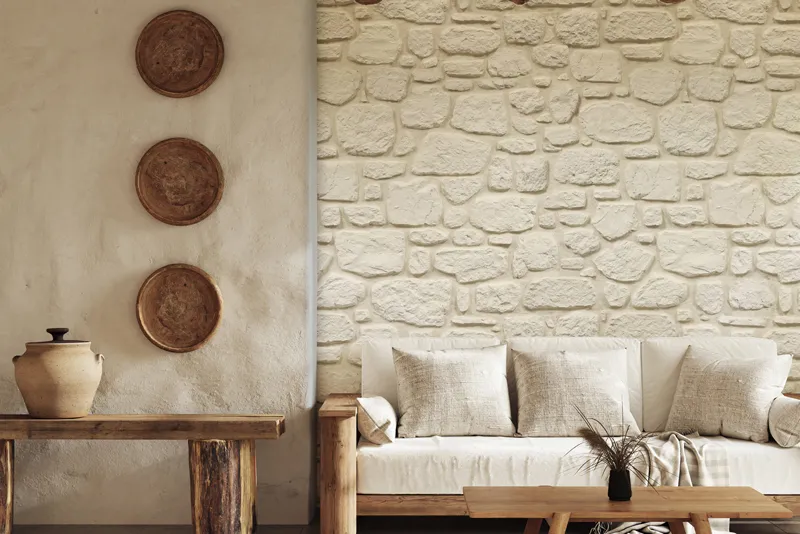
Interior space with light stone wall and wooden furniture.
Beyond its appearance, manufactured stone veneer is significantly lighter than natural stone. This reduced weight simplifies installation, eliminates the need for additional structural support, and opens up possibilities for applications that would otherwise be impractical. From feature walls and fireplaces to building facades, designers can achieve high-end results without the constraints associated with heavier materials.
Cost efficiency is another key advantage. Manufactured stone veneer delivers the luxurious look of natural stone at a fraction of the price. Additionally, the installation process tends to be faster and less labor-intensive, which further reduces overall project costs. For clients seeking premium aesthetics without exceeding budget limits, this material presents an attractive solution.
Durability and low maintenance also contribute to its growing popularity. Manufactured stone veneer is designed to withstand various environmental conditions, including moisture, temperature fluctuations, and UV exposure. Unlike some natural materials, it does not require frequent sealing or intensive upkeep, making it a practical long-term investment.
Sustainability is increasingly influencing design decisions, and manufactured stone veneer aligns well with eco-conscious practices. Many products are made using sustainable materials and processes, and their lightweight nature reduces transportation emissions. Designers who prioritize environmentally responsible solutions often turn to this material as a smarter alternative.
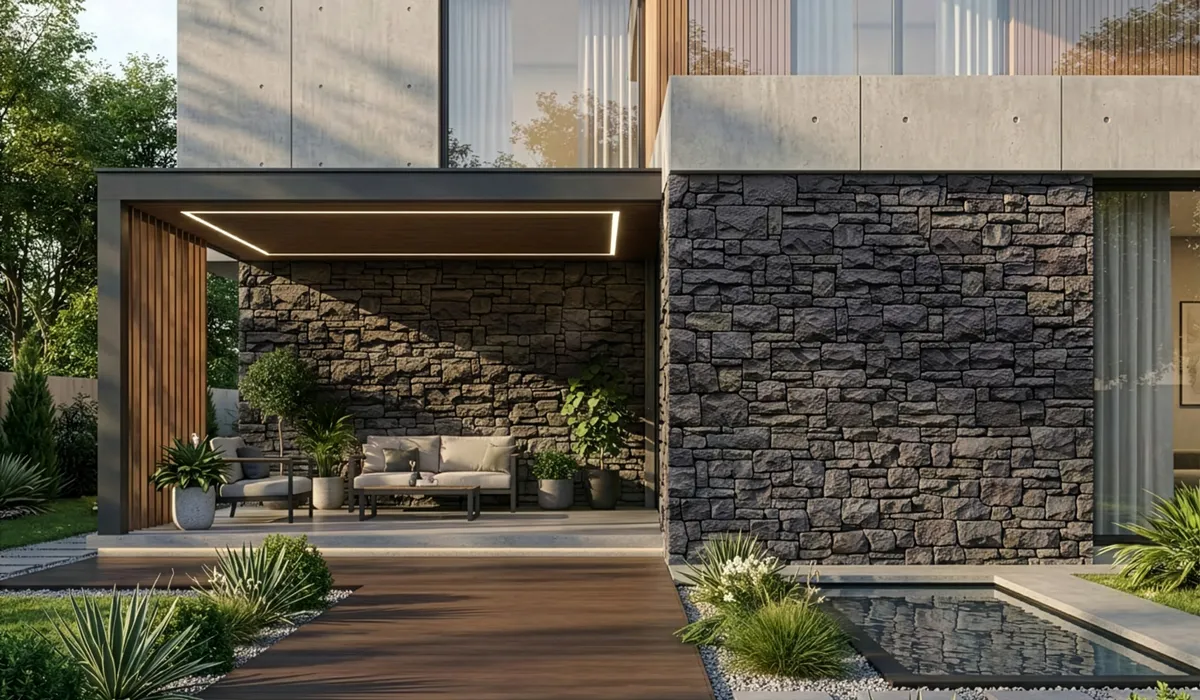
Modern minimalist house exterior with a covered patio, stone-clad walls, wooden accents, outdoor seating, and a small reflecting pool surrounded by landscaped greenery.
Finally, the flexibility it offers in design cannot be overstated. It can be used in both indoor and outdoor settings, applied to a variety of surfaces, and customized to suit specific project requirements. This adaptability empowers designers to push creative boundaries while maintaining consistency and cohesion throughout a space.
In conclusion, manufactured stone veneer has earned its place as a designer’s material of choice by offering the perfect balance of beauty, functionality, and value. As design trends continue to evolve, this innovative material is set to remain a staple in projects that demand both style and substance.