
Stone and Light: The Role of Lighting in Highlighting Stone Cladding
Stone cladding is one of the most striking decorative elements in any space. However, what is often overlooked is the crucial role of lighting. Proper lighting doesn’t just illuminate the stone — it brings it to life, highlighting its texture, depth, and natural colors. When used correctly, stone can become the focal point of any room, whether it’s the living room, kitchen, or even the bathroom. Combined with careful lighting, it can completely transform a space, adding both elegance and personality.
The Importance of Texture
Stone is a material with a pronounced three-dimensional surface. Unlike a simple painted wall, it features irregularities and natural patterns that give character to a space. Lighting that hits the stone at an angle creates shadows, emphasizing these details and adding depth. For instance, a natural stone wall in a living room may appear flat during the day, but at night, hidden LED lights can highlight all its lines and textures, creating an atmosphere of warmth and sophistication. This interplay of light and shadow makes stone unique among building materials, turning a simple wall into a dynamic visual feature.
Types of Lighting that Enhance Stone
Hidden (LED) Lighting:
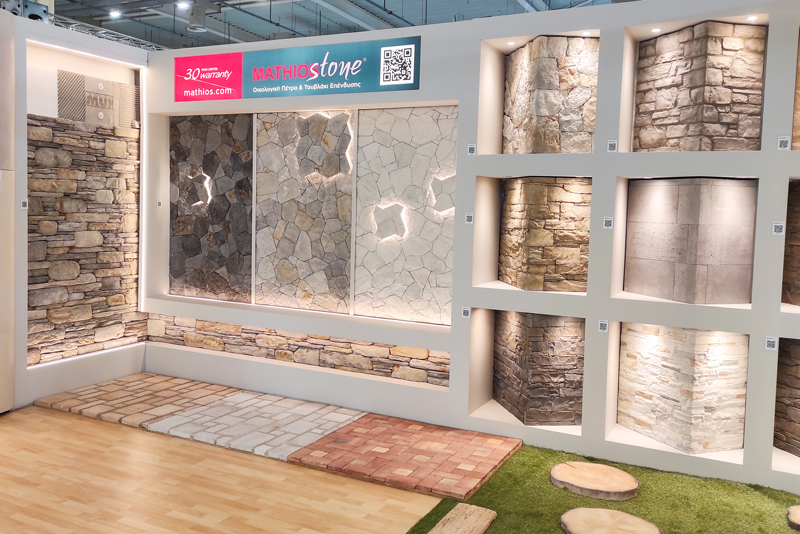
Ideal for minimalistic and modern spaces, hidden LED strips can be installed behind shelves, along the edges of walls, or under ledges. They provide soft, even illumination that accentuates the stone’s natural features without being overpowering, perfect for creating a relaxing and inviting ambiance.
Spotlights:
Directional spotlights allow you to focus light on specific sections of the stone wall, emphasizing its natural irregularities and details. This technique is particularly effective for walls with pronounced textures or for creating visual focal points in living areas, hallways, or even bedrooms.
Wall Washers:
Wall washer lights “wash” the wall with light, producing an even glow while minimizing harsh shadows. They are perfect for large walls or commercial spaces where a clean, bright look is desired, as they make the room feel more spacious and open while still highlighting the stone.
Accent Lighting:
Accent lights, such as small LED uplights or recessed floor lights, can add drama by highlighting vertical surfaces or unique stone patterns. These are especially effective in combination with other lighting types, creating layers of light that enhance depth and visual interest.
Warm or Cool Light?
The color temperature of your lighting dramatically affects how stone is perceived:
- Warm light (yellowish) emphasizes the stone’s natural tones and creates a cozy, inviting atmosphere, making it ideal for living rooms, bedrooms, or lounges.
- Cool light (white or slightly blue) gives a clean, modern look, which works well in kitchens, bathrooms, and office spaces where brightness and clarity are essential.
Mixing warm and cool lighting strategically can create contrast and highlight different aspects of the stone in different areas, enhancing both functionality and aesthetics.
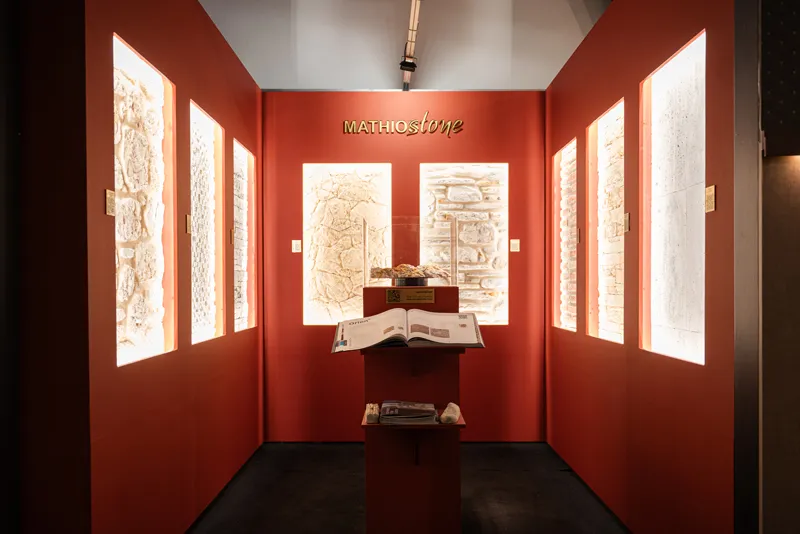
Exhibition space with red walls and illuminated panels showcasing Mathios Stone decorative stone textures, with an open information book displayed at the center.
Common Mistakes
Many make the mistake of using strong, flat overhead lighting that washes out the texture of the stone. Another common error is using too many fixtures, which can overwhelm the eye and make the space feel cluttered. To truly showcase stone, it’s important to balance light and shadow carefully. The goal is to highlight the material’s natural beauty without creating glare or distraction.
Practical Examples
- Living Room: A stone wall behind a sofa can be illuminated with hidden LED strips along its edges, creating a warm, cozy ambiance in the evenings. Adding spotlights at certain points can enhance the wall’s texture and make it a striking focal point.
- Bathroom: Using cool lighting with wall washers, stone walls appear clean and modern, while their texture adds a natural, spa-like feel. Small accent lights can be placed near mirrors or shelves to highlight architectural details.
- Kitchen: Spotlights over countertops or islands highlight the natural lines and patterns in the stone, making the workspace both functional and visually appealing. Combining this with under-cabinet LED strips enhances visibility and brings warmth to the kitchen.
- Outdoor Spaces: Stone cladding isn’t limited to interiors. Exterior walls, patios, or garden features can benefit from uplights, downlights, or spotlights. Lighting the stone at night enhances its texture, adds depth to outdoor areas, and creates a welcoming atmosphere.
Conclusion
Stone cladding alone is a powerful aesthetic feature. When combined with the right lighting, it transforms into a true centerpiece of any space. The correct placement of fixtures, choice of light temperature, and attention to the stone’s texture make the difference between a simple wall and a work of art. With thoughtful planning and a touch of creativity, stone and light can work together to create an environment that is both stunning and inviting, leaving a lasting impression on anyone who enters the space.